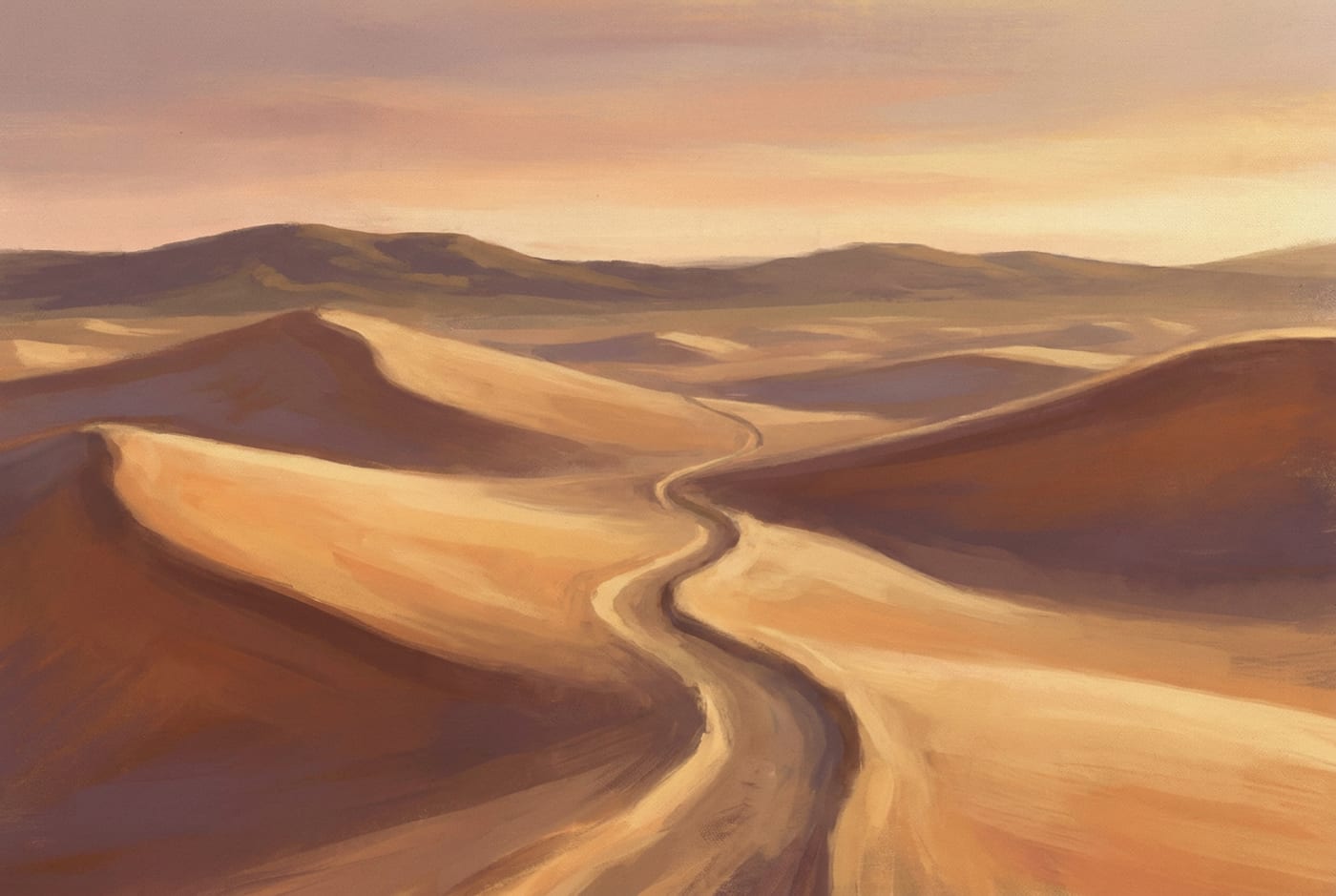
The Prophet ﷺ and the Muslims migrate from Mecca to Yathrib, which becomes known as Madinat al-Nabi, the City of the Prophet. The Islamic calendar later counts its years from this migration.
For about thirteen years the Prophet ﷺ had called the people of Mecca to Islam, and for much of that time the Muslims faced pressure, mockery, and real danger from the leaders of Quraysh. Out of that hardship came an opening. Pilgrims from the town of Yathrib, north of Mecca, met the Prophet ﷺ and accepted his message. They invited him and his followers to their city and pledged to protect them. Little by little, the Muslims of Mecca began to leave their homes and head for Yathrib, often quietly and at great personal cost.
The Prophet ﷺ stayed behind until he too was commanded to leave. His own departure was the most dangerous of all, because Quraysh wanted to stop him. He set out with his close companion Abu Bakr, and the two of them sheltered in a cave for a time while the search for them passed by. The Qur'an itself remembers this moment, recalling the two who were in the cave and the words, 'Do not grieve, for God is with us.' It is one of the few parts of the journey that scripture records directly.
When the Prophet ﷺ reached Yathrib, the people came out to welcome him with great joy. The city opened its doors, and over time it took a new name, Madinat al-Nabi, the City of the Prophet, which we know today simply as Medina. Here the small, scattered community of believers could finally live and worship in safety. The emigrants who had left Mecca, and the helpers who received them in Medina, began to build a single community bound together by faith rather than by tribe.
The Hijra, a word that means migration, was far more than a change of address. It marked the turning point when Islam moved from a persecuted message into a living community with a home of its own. Its importance was felt so deeply that, years later, the Muslim calendar was set to count its years from this migration rather than from any battle or birth. To this day the Islamic year is called the Hijri year, a quiet reminder that the faith was carried forward by people willing to leave everything behind for it.
Sources
Qur'an
Classical history
Seed content, under scholarly review.