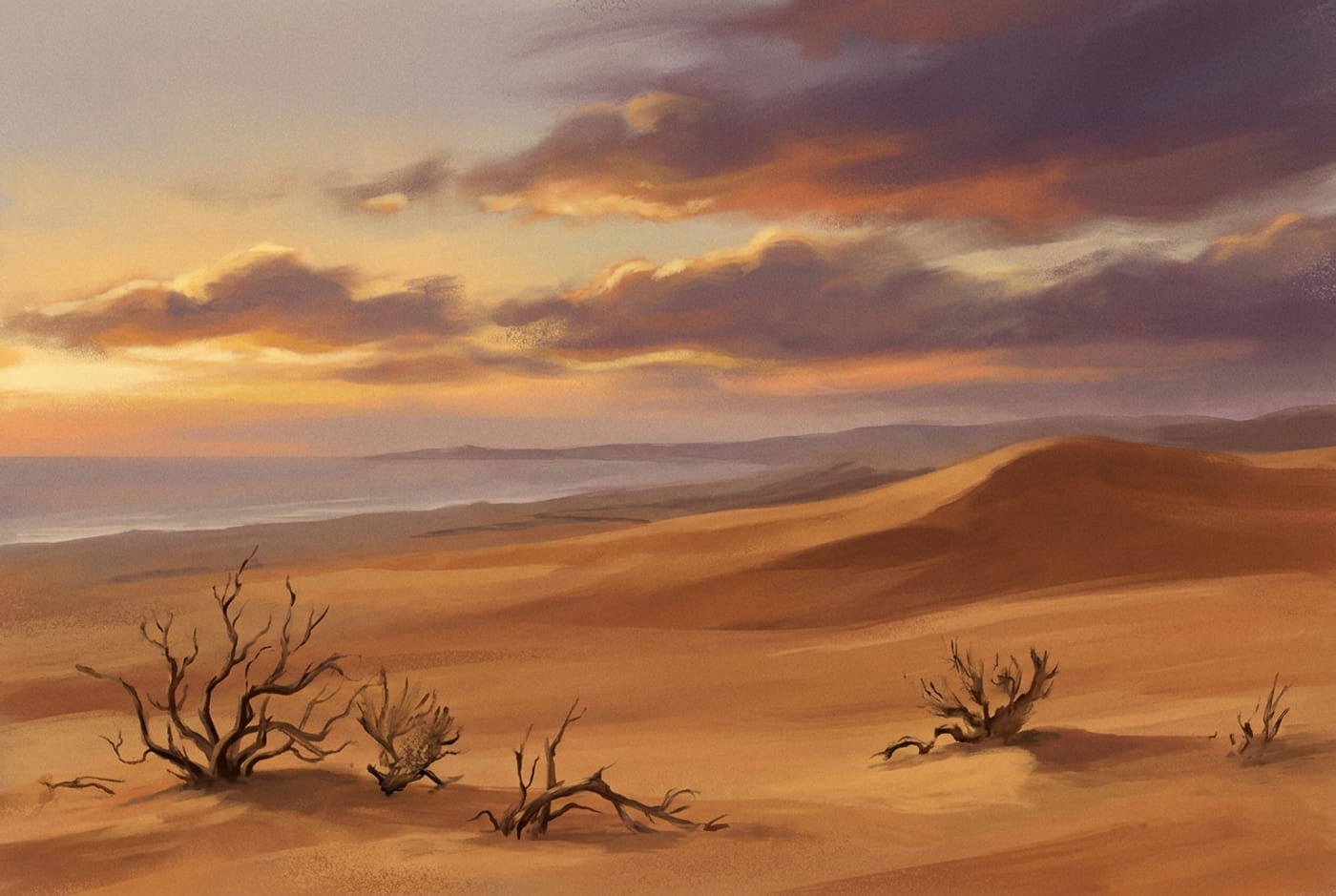
The first major battle between the Muslims of Medina and the army of Quraysh ends in a decisive Muslim victory, despite their far smaller numbers.
Two years after the Prophet ﷺلى الله عليه وسلم and the Muslims settled in Medina, word reached the city that a large Meccan caravan was returning from Syria along the trade road. A group of Muslims set out toward the wells of Badr, southwest of Medina. But the caravan slipped away, and instead the army of Quraysh marched out from Mecca to meet the Muslims in open battle. What began as a small expedition turned into the first major test between the young community and one of the most powerful tribes in Arabia.
The numbers were heavily against the Muslims. They were only a few hundred, lightly equipped, while Quraysh came with a much larger and better armed force. The Prophet ﷺلى الله عليه وسلم placed his people near the wells of Badr and spent the night before the fighting in prayer, turning to God for help. The Qur'an itself recalls this moment, reminding the believers that God supported them at Badr when they were few and weak, so that they would be grateful and not proud.
When the two sides met, the battle did not last long. Against every expectation the smaller Muslim force broke the army of Quraysh, and several of Mecca's leading men fell in the fighting. For the believers it felt like a clear sign that they had not been left alone. For Quraysh it was a shock that shook their sense of command over the region, and the news travelled quickly among the tribes.
Badr mattered far beyond the day itself. It was the first time the Muslim community stood as one and survived a direct trial of its existence, and the victory gave it confidence and respect among the tribes. The Qur'an returns to Badr in Surah al-Anfal, drawing lessons from it about trust in God, patience, and how the few can stand firm when their cause is true. It is remembered as a turning point in the early history of Islam.
Sources
Qur'an
Classical history
Seed content, under scholarly review.